
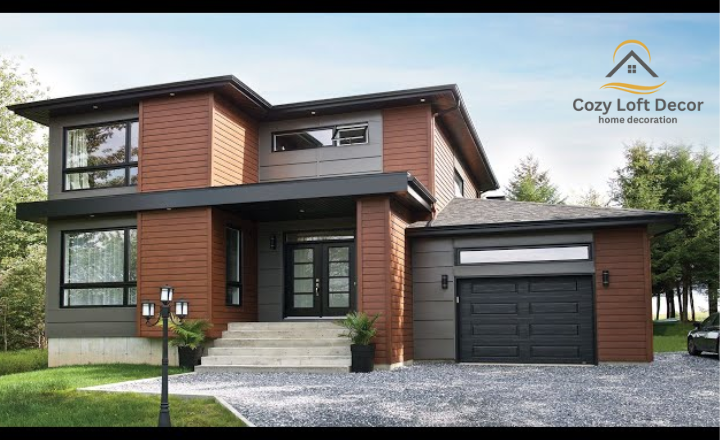
Modern brick house design combines the timeless strength of brick with sleek, contemporary architecture. Today’s modern brick homes focus on clean lines, minimalist forms, and smart material combinations. Brick is no longer just traditional it now creates bold, stylish, and sophisticated exteriors.
With the right colors and textures, modern brick house design enhances both curb appeal and functionality. Thoughtful planning helps balance warmth with modern elegance. These design ideas make modern brick houses both visually striking and long-lasting.
What Is A Modern Brick House?
A modern brick house is a home design that uses brick as a primary material while embracing contemporary architecture and styling. It focuses on clean lines, simple forms, and minimal detailing rather than traditional ornamentation.
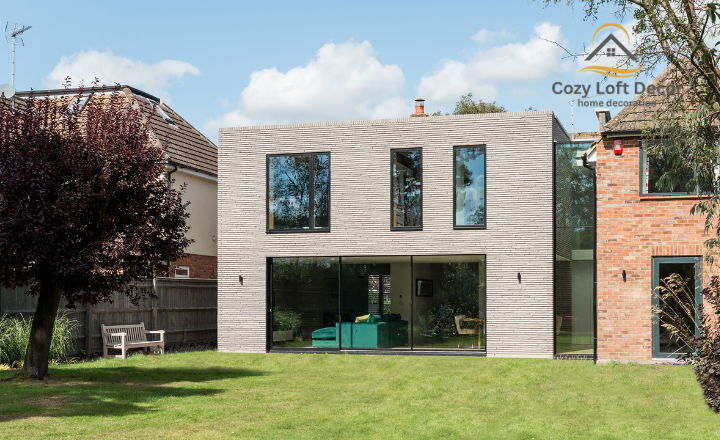
Modern brick houses often combine brick with materials like glass, concrete, steel, or wood to create contrast and visual interest. Neutral or muted brick colors, large windows, and open layouts are common features. The result is a home that feels timeless, functional, and visually modern while benefiting from brick’s durability and energy efficiency.
Here Is All In Short About A Modern Brick House
| Feature | Description |
| Materials | Use of high-quality, often handmade bricks that showcase unique textures and colors. |
| Design | Clean, minimalist lines with asymmetrical features that push the boundaries of traditional brickwork. |
| Technology | Integration of smart home systems and energy-efficient components. |
| Sustainability | Use of recycled materials and bricks combined with eco-friendly construction practices. |
| Lighting | Large windows and strategic placement to maximize natural light and warmth. |
| Space | Open floor plans that harmonize indoor and outdoor living spaces. |
Design Elements Of Modern Brick Houses
Design Elements of Modern Brick Houses focus on simplicity, functionality, and visual balance while using brick in a contemporary way. Clean lines and geometric forms replace ornate details, giving the home a sleek appearance. Neutral brick tones such as white, grey, beige, or charcoal are commonly used to enhance a modern aesthetic.
Brick is often combined with materials like glass, concrete, steel, or wood to add contrast and depth. Large windows, open layouts, and minimalist brick patterns help create bright, airy spaces. Together, these elements transform traditional brick into a modern, stylish, and timeless home design.
Exterior Design And Materials
Exterior Design and Materials play a vital role in shaping the look and performance of modern brick houses. Clean architectural lines, balanced proportions, and minimalist detailing define the exterior design, giving the home a sleek and contemporary appeal.
Brick is often used in neutral or muted tones and paired with materials like glass, concrete, metal, or natural wood to create contrast and depth. Large windows, sliding glass doors, and open façades enhance natural light while softening the solid brick structure. Modern finishes, subtle textures, and thoughtful material combinations ensure the exterior looks elegant, durable, and visually striking.
- Materials and Colors: A combination of traditional brick with contemporary materials like metal or glass.
- Front Elevation: Sleek and often asymmetrical, showcasing the geometric aesthetic of the house.
- Exterior Lighting: Strategically placed to highlight the architecture and enhance safety.
- House Numbers: Usually in a clean, modern font that reflects the house’s design style.
Incorporating Natural Light
Incorporating Natural Light is a key element in modern brick house design, as it balances the solid look of brick with openness and warmth. Large windows, floor-to-ceiling glass panels, and sliding doors allow sunlight to flow freely into interior spaces.
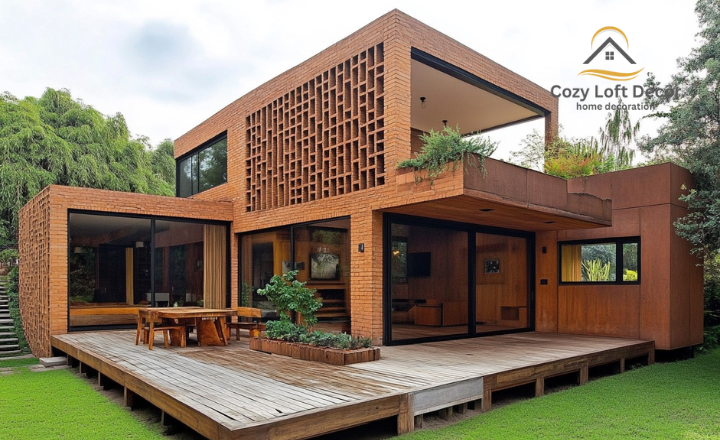
Open floor plans help light travel deeper throughout the home, creating a bright and airy feel. Skylights and light wells are often used to illuminate central areas and hallways. When paired with light-colored brick and reflective surfaces, natural light enhances both comfort and modern elegance.
- Design for Natural Light: Large, unobstructed windows and often, glass walls.
- Focal Point: Windows becomes a focal point, merging the barrier between indoors and outdoors.
Landscaping And Outdoor Spaces
Landscaping and Outdoor Spaces play an essential role in enhancing the overall appeal of modern brick houses. Clean, minimalist landscaping with structured greenery, stone pathways, and trimmed lawns complements the solid texture of brick.
Outdoor spaces such as patios, decks, and courtyards extend the living area and create a seamless indoor-outdoor connection. Natural materials like wood, gravel, and concrete pair beautifully with brick for a modern look. Thoughtful lighting and simple plant selections further highlight the home’s architecture while keeping the exterior elegant and inviting.
- Modern Backyard: Often includes a functional patio or decking area for entertainment.
- Outdoor Spaces: Designed to be an extension of the interior living spaces, often with cohesive materials and colors.
Room Specific Considerations
In modern brick house design, room-specific considerations are essential to create spaces that are both functional and visually appealing. In living rooms, exposed brick walls or fireplaces can serve as striking focal points while maintaining an open, airy feel with large windows. Kitchens benefit from brick backsplashes or feature walls paired with sleek cabinetry and modern appliances for a contemporary look.
Bedrooms can feature soft brick tones or partial brick walls to add warmth without overwhelming the space, complemented by neutral décor and natural light. Bathrooms can incorporate brick tiles or textured finishes to combine style with durability, while home offices can use subtle brick accents to create a professional yet inviting atmosphere. Even rooms connected to outdoor spaces, like sunrooms or family areas, can maximize natural light and views by blending brick with large glass panels, ensuring a cohesive and modern home design throughout.
Crafting A Modern Kitchen
Crafting a Modern Kitchen in a brick house involves blending functionality with sleek, contemporary aesthetics. Brick can be used as a backsplash, feature wall, or even an accent on the island to add texture and warmth. Pairing it with minimalist cabinetry, clean countertops, and modern appliances ensures a streamlined and efficient workspace.
Open shelving, hidden storage, and smart lighting enhance usability while maintaining a clutter-free look. Large windows or glass doors bring in natural light, balancing the solidity of brick with brightness. Using neutral tones, metallic accents, and contrasting materials like wood or concrete creates a stylish, inviting kitchen that complements the modern brick house design.
- Countertops: Quartz or polished concrete for durability and style.
- Backsplash: Subway tile or more exposed brick to enhance character.
- Island: A central feature for prep and casual dining, perhaps with waterfall edges.
Living Room Layouts
Living Room Layouts in modern brick houses focus on creating open, airy, and functional spaces that highlight the beauty of brick. Open-plan layouts allow the living area to flow seamlessly into dining or kitchen spaces, enhancing natural light and connectivity.
Exposed brick walls or fireplaces can serve as focal points, while minimalist furniture and clean lines keep the room uncluttered. Strategic placement of seating encourages conversation and comfort, and large windows or sliding glass doors connect the interior with outdoor areas. Using neutral tones, layered textures, and subtle décor accents ensures the living room feels warm, modern, and inviting.
- Furniture Placement: Create a conversation area, making the fireplace a focal point.
- Flooring: Polished hardwood or concrete floors to contrast with the rustic brick.
Contemporary Bathroom Styles And Sets
Contemporary Bathroom Styles and Sets in modern brick houses focus on clean lines, minimalism, and functional elegance. Brick can be incorporated as accent walls or textured tiles, providing warmth and character to the space. Modern bathroom sets often feature floating vanities, sleek faucets, frameless glass showers, and wall-mounted toilets to maintain a streamlined look.
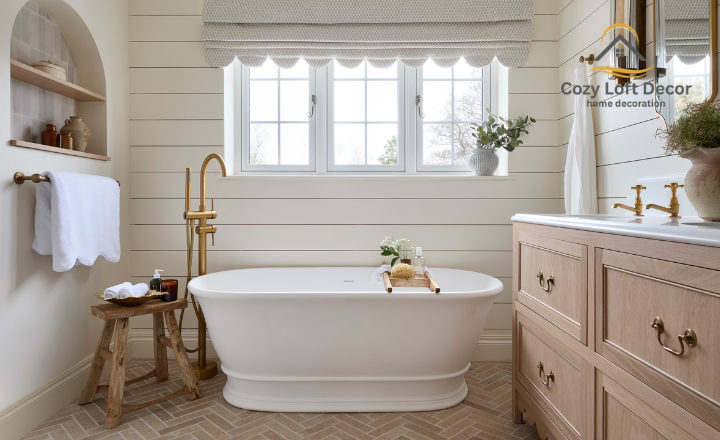
Neutral colors, such as whites, greys, or earthy tones, complement brick surfaces while creating a calm, spa-like atmosphere. Accessories like recessed lighting, mirrors, and subtle metallic finishes enhance both style and functionality. The result is a contemporary bathroom that balances modern design with the timeless appeal of brick.
- Fixtures: Wall-mounted sinks and taps for a minimalist effect.
- Lighting: LED strips or recessed lights to enhance the modern vibe.
- Bed Frame: Choose a sleek, modern design, preferably in darker tones.
- Wardrobe: Opt for built-in wardrobes with sliding doors to save space and maintain clean lines.
Choosing The Right Materials
Choosing the Right Materials is crucial in modern brick house design to achieve both durability and aesthetic appeal. While brick forms the primary structure, combining it with complementary materials enhances the contemporary look.
Glass is ideal for large windows and doors, allowing natural light to balance the solidity of brick. Concrete and steel add sleek, modern touches to façades, while wood introduces warmth and texture. For interiors, materials like stone, ceramic, or engineered surfaces work well with brick accents in kitchens, bathrooms, and living spaces. Thoughtful material selection ensures a cohesive, stylish, and long-lasting modern brick home.
Types Of Bricks And Stones
The choice of bricks and stones is essential in defining the style, texture, and durability of a modern brick house. Clay bricks offer timeless appeal and come in a variety of colors and textures, making them suitable for both interior and exterior walls.
Concrete bricks are strong, uniform, and ideal for minimalist modern designs, while engineered bricks provide precision and consistency for structural or decorative purposes. Reclaimed bricks add character and a touch of rustic charm, perfect for feature walls or accent areas. Natural stones like granite, limestone, sandstone, and slate bring elegance and durability, often used for façades, patios, and landscaping.
Veneer stones offer the look of real stone at a lower cost, ideal for cladding or decorative accents. Selecting the right combination of these materials ensures a modern brick house that is stylish, functional, and long-lasting.
- Clay Bricks: Known for their vibrant colors and classic appeal. They continue to be a top pick for their natural appearance and strength.
- Concrete Bricks: Valued for their uniform size and can be pigmented to various colors.
- Natural Stone: Offers a unique and timeless look with each stone piece being distinct.
Sustainable And Durable Materials
Sustainable and Durable Materials are key to creating modern brick houses that are eco-friendly, long-lasting, and low-maintenance. Bricks themselves are highly durable, energy-efficient, and recyclable, making them an excellent sustainable choice. Pairing brick with materials like reclaimed wood, recycled concrete, or stone reduces environmental impact while adding texture and warmth.
Energy-efficient glass, insulated panels, and low-VOC finishes enhance comfort and sustainability. Choosing materials that are both resilient and environmentally responsible ensures the home remains stylish, functional, and future-ready, while minimizing maintenance and energy costs over time.
- Recycled Bricks: Offer an eco-friendly solution, lowering the environmental impact by reusing materials.
- Locally-Sourced Stone: Reduces transportation emissions and supports local economies.
Extensions And Remodeling Ideas
Extensions and Remodeling Ideas for modern brick houses allow homeowners to update spaces while maintaining a cohesive and contemporary look. Adding a glass or steel-framed extension can create extra living space, such as a sunroom, home office, or open-plan kitchen, without compromising the original brick aesthetic.
Brick feature walls or textured accents can be integrated into remodeled interiors to tie new areas to existing structures. Outdoor extensions like patios, decks, or pergolas enhance functionality and connect indoor and outdoor living. Modern finishes, energy-efficient materials, and thoughtful layouts ensure that extensions and remodeling projects blend seamlessly with the home’s design while adding value and style.
Adding Modern Extensions
- Extension Projects:
- Front Door and Entrance: An inviting modern extension could be as simple as updating our front door to a contemporary design that sets the tone for the rest of the house. Consider a new entrance with bold materials that complement the traditional brick.
- Side Extension: Ideal for a modern bungalow or any brick house craving more space. Side extensions with materials like glass or contrasting brick can offer a stark, beautiful juxtaposition against the existing structure.
- Roof Additions: Swapping a traditional hip roof with a flat or pitched roof can dramatically transform the silhouette of our house.
Exterior And Interior Remodeling Trends
Exterior and Interior Remodeling Trends in modern brick houses focus on blending contemporary style with functionality and sustainability. On the exterior, trends include mixing materials like brick, glass, and metal, using muted or neutral brick tones, and incorporating large windows or sliding doors to maximize natural light.
Minimalist landscaping, integrated lighting, and energy-efficient features are also popular. Inside, open floor plans, exposed brick accent walls, floating furniture, and smart storage solutions create airy and practical spaces. Sustainable materials, textured finishes, and bold statement elements like kitchen islands or feature walls reflect current design preferences while keeping the home stylish, modern, and timeless.
- Trendsetter Updates:
- Exterior: We’re seeing a trend towards blending materials such as wood paneling with brick to juxtapose old and new. This can make our home stand out as a neighborhood trendsetter.
- Interior Remodeling: Modernizing the interior might involve open floor plans, minimalist decor, and smart home features that elevate the living experience within the traditional brick confines.
- Impact on Resale Value:
- Thoughtful Additions: Any extension or update should not only suit our immediate needs but also consider future resale value. Quality materials and timeless designs often pay off.
Conclusion
A well-planned modern brick house design brings together durability, style, and contemporary living. By using clean lines, modern materials, and carefully chosen brick finishes, your home can look both timeless and current.
Brick adds character while supporting energy efficiency and low maintenance. When balanced with light, space, and modern details, it creates a truly elegant result. With the right design approach, a modern brick house becomes a perfect blend of beauty and strength.
FAQs
What Are The Benefits Of Building A House With Brick?
Brick offers durability, low maintenance, excellent insulation, fire resistance, and a timeless look that can complement modern architectural styles.
Is Brick Construction Energy Efficient?
Yes, brick has good thermal mass, which helps regulate indoor temperatures by absorbing and slowly releasing heat, contributing to energy efficiency.
Can Brick Be Combined With Other Materials In Modern Home Design?
Absolutely. Modern brick homes often incorporate materials like glass, steel, wood, and concrete to create striking contrasts and add texture.
How Much Does It Cost To Build A Modern Brick House?
Costs vary depending on location, design complexity, brick type, and labor. Generally, brick can be more expensive upfront but may save money over time due to durability and low maintenance.
What Maintenance Does A Brick House Require?
Brick homes need minimal maintenance, but occasional cleaning, inspection for mortar deterioration, and repointing may be necessary to preserve structural integrity.